Tag: online consumer complaints

  • Flight Cancelled Without Notice? Consumer Commission Orders Compensation Against IndiGo and Turkish Airlines

    Flight Cancelled Without Notice? Consumer Commission Orders Compensation Against IndiGo and Turkish Airlines

    A passenger travelling from Delhi to Detroit was forced to purchase expensive last-minute tickets after his scheduled journey was disrupted without prior notice. The Chandigarh District Consumer Commission held IndiGo Airlines and Turkish Airlines jointly responsible for the inconvenience and financial loss, directing them to reimburse over ₹1.10 lakh along with ₹50,000 towards mental agony and litigation expenses.

    The ruling highlights that airlines cannot escape liability merely by refunding cancelled tickets when passengers suffer additional losses because of inadequate service.


    Quick Case Summary

    ParticularDetails
    IndustryAirlines & Travel
    CompaniesIndiGo Airlines & Turkish Airlines
    Consumer IssueFlight disruption without prior notice
    ForumDistrict Consumer Disputes Redressal Commission-I, Chandigarh
    Relief Granted₹1,10,258 reimbursement + ₹50,000 compensation
    Consumer Rights InvolvedRefund, compensation, deficiency in service
    Key TakeawayAirlines may be liable for consequential financial losses caused by sudden flight disruptions.

    Why Every Air Traveller Should Know About This Judgment

    Flight cancellations can do much more than delay your journey. They may cause you to miss important business meetings, university admissions, family events, connecting flights, hotel bookings, or even visa appointments. While airlines often offer refunds or rebooking options, these remedies may not fully compensate passengers who incur significant additional expenses because of the disruption.

    This recent decision by the Chandigarh Consumer Commission serves as an important reminder that airlines owe a duty of care to their passengers. If their failure to provide timely information or suitable alternative arrangements results in financial loss or mental distress, consumers may have the right to seek compensation under the Consumer Protection Act.

    For travellers, the judgment reinforces the importance of preserving travel documents, maintaining communication records with airlines, and understanding the legal remedies available when airline services fall short of reasonable expectations.


    Background of the Case

    The dispute arose from an international journey booked from New Delhi to Detroit via Istanbul under a codeshare arrangement between IndiGo Airlines and Turkish Airlines.

    The complainant had planned the trip so that his son could reach the United States before the commencement of a mandatory university orientation programme. Since attendance at the orientation was essential for beginning his academic session, timely arrival was critical.

    According to the complaint, the Delhi–Istanbul segment was scheduled to be operated by IndiGo, while Turkish Airlines was responsible for the onward international connection.

    However, after arriving at Delhi Airport, the passengers received an unexpected shock.

    Instead of issuing boarding passes for the complete journey, airline staff informed them that their onward travel had been cancelled. The passengers alleged that no prior email, SMS, phone call, or notification had been provided regarding the disruption.

    Although temporary accommodation was reportedly offered, the complainant decided to stay with relatives in Gurugram while awaiting a revised travel schedule. Despite repeated assurances, no immediate alternative itinerary was provided.

    When Turkish Airlines later informed the passengers that seats to Detroit would only be available several days later, the complainant feared that his son would miss the university orientation.

    Left with no practical alternative, he purchased emergency Lufthansa tickets at a substantially higher price to ensure timely arrival in the United States.

    Apart from the expensive replacement tickets, the disruption also resulted in losses on prepaid hotel bookings, some of which were non-refundable.

    The complainant subsequently approached the Consumer Commission seeking reimbursement for the additional expenses and compensation for the hardship caused by the airlines’ actions.


    Timeline of Events

    DateEvent
    Before August 2025Tickets booked from Delhi to Detroit via Istanbul
    15 August 2025Passengers reached Delhi Airport and learnt about the disruption
    Same dayNo immediate alternative journey arranged
    Following daysTurkish Airlines informed that seats were unavailable until 20 August
    Before orientationEmergency Lufthansa tickets purchased
    LaterPartial refunds processed by Turkish Airlines
    Consumer Complaint FiledMatter taken before Chandigarh Consumer Commission
    Final DecisionConsumer awarded reimbursement and compensation

    Consumer’s Allegations

    The complainant argued that both airlines failed to provide the standard of service expected from international carriers.

    His principal allegations included:

    • The flight disruption occurred without any prior intimation.
    • No timely alternative travel arrangement was made.
    • The delay jeopardised his son’s mandatory university orientation programme.
    • He had to spend significantly more on last-minute Lufthansa tickets.
    • He suffered financial loss due to partially refundable hotel bookings.
    • The airlines shifted responsibility between themselves instead of resolving the issue promptly.
    • The compensation initially offered by IndiGo did not adequately cover the actual losses suffered.

    According to the complainant, these actions amounted to a clear deficiency in service, causing both financial hardship and considerable mental stress.


    Company’s Response

    IndiGo contended that the disruption resulted from extraordinary operational circumstances that led to seat constraints after a downgrade of the aircraft. The airline maintained that it had offered hotel accommodation, alternative travel arrangements, and an ex-gratia payment of ₹20,000 per passenger without admitting liability. It also argued that ticket refund matters were the responsibility of Turkish Airlines because it had issued the tickets.

    Turkish Airlines, on the other hand, stated that it had no operational control over the Delhi–Istanbul flight operated by IndiGo. It submitted that it had fulfilled its contractual obligations by processing refunds for the cancelled tickets and therefore should not be held liable for the operational disruption.

    What Did the Consumer Commission Observe?

    The Chandigarh District Consumer Disputes Redressal Commission examined whether the airlines had fulfilled their obligations after the sudden disruption of the complainant’s journey.

    The Commission noted that the passengers had booked a complete itinerary from New Delhi to Detroit under a codeshare arrangement. Regardless of which airline operated a particular sector, the passengers expected to reach their destination as scheduled.

    Although Turkish Airlines refunded the ticket amount and IndiGo offered an ex gratia payment, the Commission observed that these measures did not compensate the complainant for the actual financial losses caused by the disruption.

    More importantly, the Commission found that the complainant had to purchase expensive last-minute tickets because no timely alternative arrangement was provided. The documentary evidence clearly established that the replacement tickets cost substantially more than the original booking.

    The Commission also accepted that the complainant suffered additional losses due to partially refunded hotel bookings in the United States.

    It concluded that the sudden disruption without prior notice caused unnecessary hardship and financial loss, amounting to deficiency in service under consumer law.


    Why Were Both Airlines Held Liable?

    One of the most significant aspects of this judgment is that the Commission did not allow either airline to avoid responsibility by blaming the other.

    IndiGo argued that Turkish Airlines had issued the ticket, while Turkish Airlines contended that IndiGo was responsible because it operated the affected flight.

    The Commission rejected this attempt to shift liability. Since the passengers had purchased a single itinerary under a codeshare arrangement, both airlines were held jointly and severally liable for the deficiency in service.

    This means the complainant can recover the awarded amount from either airline, leaving it to the airlines to settle responsibility between themselves.


    Final Order of the Consumer Commission

    The Commission partly allowed the consumer complaint and directed IndiGo Airlines and Turkish Airlines to:

    • Pay ₹1,10,258 towards:
      • Additional cost of emergency flight tickets
      • Unreimbursed hotel booking expenses
    • Pay ₹50,000 towards:
      • Mental agony
      • Harassment
      • Litigation costs
    • Pay 9% annual interest on the awarded amount from 15 August 2025 until payment.
    • Comply with the order within 45 days, failing which the amount would attract 12% penal interest.

    The decision reinforces that compensation is not limited to ticket refunds. Consumers may also recover foreseeable financial losses directly resulting from deficient service.


    Why This Judgment Matters

    This decision is important for every air traveller because it reinforces several key consumer protection principles.

    Airlines Cannot Simply Refund the Ticket

    Refunding the original fare may not be enough if passengers incur additional expenses because of the airline’s failure.

    Timely Communication Is Essential

    Passengers should be informed promptly about cancellations or major disruptions so they can make alternative arrangements without unnecessary financial loss.

    Codeshare Flights Do Not Reduce Consumer Rights

    Passengers often do not know which airline operates each leg of their journey. This judgment makes it clear that airlines cannot avoid responsibility by relying on internal operational arrangements.

    Consequential Losses May Be Recoverable

    When consumers can prove that additional expenses were directly caused by the airline’s deficiency in service, consumer commissions may award compensation beyond the ticket price.


    Understanding Your Rights After a Flight Cancellation

    If an airline cancels your flight or significantly disrupts your journey, you may have several rights depending on the circumstances.

    These may include:

    • Refund of the ticket price
    • Rebooking on another flight
    • Reasonable assistance during delays
    • Compensation where permitted by law
    • Reimbursement of expenses directly caused by the airline’s failure
    • The right to seek compensation through consumer dispute mechanisms if the airline fails to resolve the matter.

    Every case depends on its specific facts, but consumers are not expected to bear avoidable financial losses caused by deficient service.


    Common Airline Complaints Received by Consumers

    Air travel is one of the most common sectors where consumers face disputes. Some frequent complaints include:

    • Flight cancellations without prior notice
    • Long delays
    • Refund delays
    • Denied boarding
    • Lost or damaged baggage
    • Missed connecting flights
    • Poor customer support
    • Non-payment of promised compensation
    • Extra charges without proper explanation
    • Failure to provide alternative travel arrangements

    Many of these issues can be resolved directly with the airline, but unresolved disputes may require escalation through consumer grievance mechanisms.


    What Should Consumers Do in Similar Situations?

    If you experience a similar problem, taking the right steps can significantly strengthen your case.

    Preserve All Evidence

    Keep copies of:

    • Flight tickets
    • Boarding passes
    • Booking confirmations
    • Hotel invoices
    • Payment receipts
    • Airline emails and messages
    • Chat transcripts
    • Photographs, if relevant

    Ask the Airline for Written Clarification

    Request a written explanation of:

    • Why the flight was cancelled or disrupted
    • Alternative travel options offered
    • Refund details
    • Compensation policy

    Keep Records of Additional Expenses

    If you have to purchase another flight, stay in a hotel, or incur transport expenses because of the disruption, retain all invoices and receipts.

    Escalate the Matter Promptly

    If the airline fails to provide a satisfactory resolution, you can approach the appropriate consumer grievance mechanism with supporting documents.


    Key Takeaways

    • A simple ticket refund may not fully compensate passengers for losses caused by airline negligence.
    • Airlines operating under codeshare arrangements may both be held responsible.
    • Consumers can claim compensation for additional expenses if they are properly documented.
    • Timely communication by airlines is an important part of quality service.
    • Maintaining records and evidence greatly improves the chances of obtaining relief.

    How to File a Consumer Complaint Against an Airline

    If an airline fails to resolve your grievance despite repeated follow-ups, you don’t have to stop at customer support. You can escalate the matter through the appropriate consumer dispute resolution channels.

    Before filing a complaint, make sure you have:

    • Flight ticket and booking confirmation
    • Boarding pass (if issued)
    • Payment receipts
    • Refund details
    • Hotel and transport bills
    • Emails, SMS, or chat conversations with the airline
    • Any proof of additional expenses caused by the disruption

    You should first submit a written complaint to the airline and give it a reasonable opportunity to resolve the issue. If the response is unsatisfactory, you may approach the appropriate consumer grievance mechanism.

    Consumers in India can also seek assistance through Voxya, which helps consumers raise complaints, send legal notices when required, and escalate unresolved disputes to the appropriate forum.


    How Voxya Can Help

    Many airline complaints remain unresolved because consumers don’t know how to escalate them effectively.

    Voxya helps consumers by:

    • Raising an online consumer complaint
    • Facilitating communication with the company
    • Sending legal notices where appropriate
    • Guiding consumers on further legal remedies if the dispute remains unresolved
    • Helping consumers maintain proper documentation throughout the complaint process

    While many disputes are resolved through negotiation, some may require approaching the Consumer Commission when the company fails to provide an appropriate resolution.


    Frequently Asked Questions

    Can I claim compensation if an airline cancels my flight without notice?

    Yes. Depending on the circumstances, you may be entitled to a refund, alternative travel arrangements, or compensation for losses caused by the airline’s deficiency in service.


    Can I recover the cost of booking another flight?

    If you had to purchase another ticket because the airline failed to provide a suitable alternative, a Consumer Commission may award reimbursement if the expense is properly supported by evidence.


    Who is responsible in a codeshare flight?

    Liability depends on the facts of the case. As this judgment demonstrates, both airlines may be held jointly responsible if their actions result in deficiency in service.


    Can I claim hotel expenses?

    If hotel losses directly resulted from the airline’s failure and you have supporting documents, you may seek reimbursement.


    What documents should I keep?

    Keep your booking confirmation, boarding pass, payment receipts, hotel invoices, refund details, and all communication exchanged with the airline.


    Is a ticket refund always enough?

    Not necessarily. If the cancellation causes additional financial loss or mental harassment, consumers may seek further compensation depending on the facts.


    Can I approach the Consumer Commission directly?

    Yes, if the dispute remains unresolved after raising it with the airline, you may pursue remedies available under the Consumer Protection Act.


    How long should I wait before escalating my complaint?

    You should first give the airline a reasonable opportunity to resolve the matter. If there is no satisfactory response within a reasonable period, consider escalating the complaint.


    Conclusion

    Unexpected flight cancellations can cause far more than travel inconvenience. They may lead to missed academic opportunities, business losses, additional travel costs, and significant mental stress.

    This Chandigarh Consumer Commission decision reinforces that airlines cannot simply refund the ticket and ignore the broader financial consequences suffered by passengers. Where consumers incur genuine losses because of deficient service, they may be entitled to appropriate compensation.

    If you experience a similar issue and are unable to resolve it directly with the airline, understanding your rights and preserving the necessary evidence can significantly improve your chances of obtaining relief. Platforms like Voxya can also help consumers escalate unresolved complaints through the appropriate channels.


  • Hotel Negligence in Shimla: Consumer Wins Compensation After Unsafe Stay

    Hotel Negligence in Shimla: Consumer Wins Compensation After Unsafe Stay

    Booking a luxury hotel or holiday property comes with an expectation of comfort, convenience, and above all, safety. Unfortunately, not every stay lives up to these expectations. Cases involving hotel complaints often arise when guests experience poor service, hidden charges, unsafe premises, denied refunds, or negligence that results in physical injury.

    A recent decision by the Chandigarh District Consumer Commission highlights that hotels and hospitality providers have a legal responsibility to ensure the safety and well-being of their guests. In this case, a guest staying at a luxury property in Shimla suffered a foot injury after being forced to walk on a dangerous road because the hotel failed to provide transportation it had promised.

    The Commission held the hotel liable for deficiency in service and awarded compensation to the consumer. The ruling serves as an important reminder that consumers have enforceable rights when hospitality providers fail to meet their obligations.

    If you encounter similar issues during a hotel stay, you can raise a hotel complaint, submit an online consumer complaint, or file consumer complaint through Voxya to seek an appropriate resolution.


    Quick Case Summary

    ParticularDetails
    CompanyLuxury Property – The Manor, Naldehra, Shimla
    IndustryHotel & Hospitality
    Consumer IssueUnsafe access road and failure to provide promised transportation
    Booking Amount₹56,640
    ForumChandigarh District Consumer Disputes Redressal Commission
    Relief Granted₹20,000 compensation
    Key FindingHotel was negligent in ensuring guest safety
    Consumer Rights InvolvedSafe accommodation, deficiency in service, compensation

    Background of the Case

    The dispute arose after an advocate booked a luxury two-bedroom apartment at The Manor, Naldehra, Shimla, for a five-day vacation with her family. The booking included breakfast, and nearly ₹56,640 was paid for the stay.

    When the family arrived, they discovered that the road connecting their accommodation to the property’s restaurant was in poor condition. Ongoing construction work had turned the route into a muddy, slippery, and potentially dangerous stretch.

    Hotel staff acknowledged the condition and assured guests that transportation would be provided whenever they needed to travel between the apartment and the restaurant. Relying on this assurance, the complainant continued with her stay.

    A few days later, after dining at the restaurant, the family repeatedly requested transportation back to their accommodation. Despite multiple follow-ups, no vehicle was arranged.

    Unable to wait any longer and with no permission to use their own vehicle because of construction activity, the family had little choice but to walk back using the unsafe road during the night.

    During the walk, the complainant slipped on the marshy surface and suffered an injury to her foot, requiring medical treatment and physiotherapy. According to the complainant, the incident also affected her professional work for several weeks.

    Although the hotel manager later apologized through email and reportedly assured a refund for the final night’s stay, the promised refund was never processed. Left without a satisfactory resolution, the consumer approached the Consumer Commission by filing a consumer complaint.


    Timeline of Events

    DateEvent
    19 May 2023Consumer booked the luxury apartment by paying 50% advance.
    26 June 2023Checked into the property and noticed the unsafe road.
    26 June 2023Hotel assured transportation between apartment and restaurant.
    29 June 2023Family visited the restaurant for dinner.
    29 June 2023Transportation was not provided after dinner despite repeated requests.
    29 June 2023Consumer slipped on the unsafe road and sustained a foot injury.
    After IncidentHotel manager apologized and promised a refund.
    Refund Not GivenConsumer filed proceedings before the Consumer Commission.
    June 2025Consumer Commission awarded compensation.

    Consumer’s Allegations

    The complainant argued that the hotel failed to fulfill the assurances made at the time of the stay.

    According to the complaint:

    • The connecting road was unsafe due to ongoing construction.
    • The hotel was already aware of the hazardous condition.
    • Guests were specifically promised transportation.
    • Despite repeated requests, no transportation was arranged.
    • Guests were prohibited from using their own vehicle.
    • The complainant suffered physical injury while walking back.
    • Medical expenses and physiotherapy became necessary.
    • She experienced pain, inconvenience, mental agony, and loss of professional income.
    • The hotel promised a refund but failed to honor its commitment.

    The complainant alleged that these actions amounted to deficiency in service, making the hospitality provider liable under the Consumer Protection Act. Consumers facing similar situations may also consider sending a legal notice before approaching the consumer court, depending on the circumstances.


    Company’s Response

    The hotel operators did not appear before the Consumer Commission to contest the complaint.

    As a result, the proceedings continued ex parte, meaning the Commission decided the matter based on the evidence produced by the complainant.

    Because there was no rebuttal from the hotel, the Commission accepted the complainant’s documentary evidence, including photographs, email correspondence, and medical records. The absence of any defence also led the Commission to draw an adverse inference against the hotel regarding the allegations.


    What the Consumer Commission Observed

    The Commission emphasized that hotels and hospitality businesses owe a legal duty of care to every guest who stays on their premises.

    The Commission observed several important facts:

    The hotel knew about the unsafe road

    Evidence showed that the management was fully aware that the connecting road was under construction and posed risks to guests.


    Transportation had been promised

    The hotel had assured guests that transportation would be provided between the apartment and the restaurant because of the dangerous road conditions.

    Failing to honor this commitment directly exposed guests to unnecessary risk.


    The injury could have been avoided

    The Commission found that the complainant was compelled to walk because transportation was not arranged.

    Had the promised vehicle been provided, the accident would likely have been avoided.


    Medical evidence supported the claim

    Medical records confirmed that the complainant had indeed suffered a foot injury consistent with the incident described in the complaint.

    This strengthened the consumer’s case and established a clear connection between the hotel’s negligence and the injury.


    Refund of the full booking amount was not justified

    While the Commission held the hotel responsible for negligence, it also noted that the complainant had stayed at the property for the booked duration and had used the accommodation facilities.

    Therefore, ordering a complete refund of the booking amount would not have been appropriate. Instead, compensation for the injury, inconvenience, and mental agony was considered a fair remedy.

    Final Order of the Consumer Commission

    After examining the evidence and considering the hotel’s failure to appear before the Commission, the Chandigarh District Consumer Disputes Redressal Commission held the hospitality provider liable for deficiency in service.

    The Commission directed the hotel to:

    • Pay ₹20,000 as compensation to the complainant for the physical injury, mental agony, and inconvenience caused.
    • Acknowledge its responsibility for failing to provide the promised transportation despite being aware of the unsafe road conditions.
    • Compensate the consumer for the negligence that directly resulted in her injury.

    However, the Commission declined the request for a complete refund of the booking amount because the complainant and her family had stayed at the property throughout the reservation period and had availed themselves of the accommodation services.

    The order strikes a balance by recognizing that while the accommodation itself was utilized, the hotel’s negligence in ensuring guest safety warranted compensation under the Consumer Protection Act.


    Why This Judgment Matters

    This decision goes beyond a single consumer dispute. It sends a strong message to the hospitality industry that luxury branding alone is not enough—guest safety is a legal responsibility.

    1. Hotels Have a Duty to Ensure Guest Safety

    Whether a guest stays at a budget hotel or a luxury resort, the property owner must provide a reasonably safe environment. This responsibility extends beyond hotel rooms to walkways, parking areas, restaurants, recreational spaces, and any other facilities offered to guests.

    Failure to address known safety hazards may amount to deficiency in service, making the hotel liable for compensation.


    2. Promises Made by Hotel Staff Matter

    Many consumer disputes arise because hotels fail to honor commitments made during booking or check-in. In this case, the hotel had assured guests that transportation would be available because the connecting road was unsafe.

    Once such a promise is made, consumers are entitled to rely on it. Ignoring repeated requests for transportation constituted negligence.


    3. Consumer Rights Extend Beyond Refund Claims

    Many consumers believe they can only seek a refund if something goes wrong during their stay. However, consumer law also protects guests against:

    • Physical injuries caused by negligence
    • Mental harassment
    • Financial losses
    • Inconvenience
    • Unsafe facilities
    • Poor customer service

    Depending on the facts, consumers may be entitled to compensation even if they have completed their stay.


    4. Documentation Can Strengthen Your Case

    One of the reasons the complainant succeeded was that she preserved evidence, including:

    • Medical records
    • Email communication
    • Booking details
    • Payment receipts
    • Written apology from the hotel manager

    Keeping proper records can significantly improve the chances of obtaining relief through a consumer court.


    Consumer Rights Explained

    Understanding your legal rights can help you take appropriate action when hotels fail to deliver the services they promise.

    Deficiency in Service

    Under the Consumer Protection Act, deficiency in service refers to any fault, imperfection, shortcoming, or inadequacy in the quality or manner of providing services.

    Examples include:

    • Failure to provide promised amenities
    • Poor housekeeping
    • Unsafe hotel premises
    • Booking errors
    • Refusal to honour confirmed reservations
    • Failure to provide transportation when promised

    Consumers experiencing such issues can raise a hotel complaint or consumer complaint to seek redressal.


    Right to Safe Accommodation

    Hotels are expected to maintain premises that are reasonably safe for guests.

    This includes:

    • Safe pathways
    • Proper lighting
    • Functional elevators
    • Secure parking areas
    • Hazard-free common spaces
    • Adequate warning signs where construction or repairs are underway

    Ignoring known hazards can make the hotel legally liable.


    Compensation for Negligence

    If hotel negligence causes:

    • Physical injury
    • Medical expenses
    • Emotional distress
    • Loss of income
    • Mental agony

    Consumers may claim compensation before the Consumer Commission.

    The amount awarded depends on the facts and evidence in each case.


    Refund Rights

    A refund is not automatic in every hotel dispute.

    Consumer Commissions generally consider factors such as:

    • Whether the accommodation was used
    • Nature of the deficiency
    • Extent of inconvenience
    • Financial loss suffered
    • Whether alternative services were provided

    In some cases, compensation may be awarded instead of a full refund.


    Common Consumer Complaints in the Hotel & Hospitality Industry

    The hospitality sector frequently witnesses disputes involving poor service, misleading advertisements, and safety concerns.

    Some common hotel complaints include:

    Unsafe Hotel Premises

    • Slippery floors
    • Poor lighting
    • Broken staircases
    • Unsafe pathways
    • Construction hazards

    Booking Issues

    • Wrong room allocation
    • Overbooking
    • Cancellation despite confirmed booking
    • Hidden charges
    • Last-minute denial of accommodation

    Refund Delays

    Many hotels delay or refuse refunds after cancellations, service failures, or booking disputes.

    Consumers facing such situations may file a refund complaint.


    Misleading Advertisements

    Some hotels advertise facilities that do not exist, such as:

    • Swimming pools
    • Luxury amenities
    • Scenic views
    • Complimentary meals
    • Airport transfers

    False advertising may amount to an unfair trade practice.


    Poor Customer Service

    Examples include:

    • Staff misconduct
    • Ignoring guest complaints
    • Failure to respond
    • Unprofessional behaviour
    • Refusal to resolve genuine grievances

    Safety Negligence

    Hotels may also be liable for:

    • Injuries on hotel premises
    • Food safety issues
    • Fire safety lapses
    • Security failures
    • Poor maintenance

    Consumers should report such issues immediately and preserve evidence.


    What Consumers Should Do in Similar Situations

    If you experience negligence or poor service during a hotel stay, taking timely action can strengthen your case.

    1. Document Everything

    Take photographs and videos of the issue, whether it involves unsafe premises, poor room conditions, or missing amenities.


    2. Keep Important Documents

    Preserve:

    • Hotel booking confirmation
    • Tax invoices
    • Payment receipts
    • Email correspondence
    • Chat messages
    • Medical bills (if applicable)

    3. Report the Issue Immediately

    Inform the hotel manager in writing.

    Request acknowledgment via email or message.


    4. Collect Witness Information

    If family members or other guests witnessed the incident, note their names and contact details.


    5. Seek Medical Treatment

    If you are injured, obtain medical attention immediately and retain all prescriptions, reports, and bills.


    6. Send a Legal Notice

    If the hotel fails to resolve the issue, consider sending a legal notice before initiating formal proceedings.


    7. Escalate the Matter

    If your grievance remains unresolved, you may file consumer complaint through Voxya or approach the appropriate Consumer Commission for legal remedies.


    How to File a Consumer Complaint Against a Hotel

    If a hotel refuses to address your grievance, follow these steps:

    1. Contact the hotel’s customer support or management.
    2. Submit a written complaint with supporting evidence.
    3. Request a reasonable resolution within a specified time.
    4. Preserve all communications.
    5. If the issue remains unresolved, raise an online consumer complaint through Voxya.
    6. If necessary, approach the appropriate consumer court under the Consumer Protection Act.

    Timely action and proper documentation can significantly improve your chances of obtaining compensation or other appropriate relief.


    How Voxya Can Help

    Resolving consumer disputes often requires persistence, proper documentation, and knowledge of the available legal remedies.

    Voxya provides a structured platform that helps consumers:

    • Raise complaints against companies.
    • Escalate unresolved grievances.
    • Send legal notice to businesses where appropriate.
    • Maintain records of communications.
    • Receive guidance on available consumer remedies.
    • Understand the process of approaching the Consumer Commission when necessary.

    Many disputes are resolved after companies receive formal complaints and legal notices. Where resolution is not achieved, consumers can use the documentation generated through the process while pursuing legal remedies.


    Key Takeaways

    • Hotels are legally responsible for ensuring guest safety.
    • Failure to fulfil promised services may amount to deficiency in service.
    • Consumers can claim compensation for injuries caused by hotel negligence.
    • A full refund is not guaranteed if accommodation has already been used.
    • Preserve photographs, invoices, medical records, and written communication.
    • Written apologies from hotel staff can serve as valuable evidence.
    • Timely escalation improves the likelihood of resolution.
    • Consumers can file consumer complaint if their grievance remains unresolved.

    Frequently Asked Questions (FAQs)

    1. Can I file a consumer complaint against a hotel for negligence?

    Yes. If a hotel fails to provide safe premises or promised services, you can file a consumer complaint seeking compensation.


    2. What is considered deficiency in hotel service?

    Deficiency in service includes unsafe premises, poor maintenance, failure to provide promised amenities, booking issues, refund delays, and negligence that causes loss or injury.


    3. Can I claim compensation if I was injured during my hotel stay?

    Yes. If the injury resulted from the hotel’s negligence, you may seek compensation for medical expenses, pain, suffering, and mental agony.


    4. Will I receive a full refund if my hotel stay was unsatisfactory?

    Not necessarily. Consumer Commissions consider whether you used the accommodation and the nature of the deficiency before deciding on refunds or compensation.


    5. What evidence should I keep while filing a hotel complaint?

    Keep booking confirmations, invoices, payment receipts, photographs, videos, medical reports, emails, chat records, and any written communication with the hotel.


    6. Is a written apology from a hotel useful?

    Yes. Emails or written acknowledgements from hotel management can strengthen your complaint by showing that the hotel recognised the issue.


    7. How long does a consumer complaint take?

    The timeline varies depending on the complexity of the dispute, evidence, and proceedings before the Consumer Commission.


    8. Can I file a complaint online?

    Yes. Consumers can raise an online consumer complaint through Voxya and, if required, pursue remedies before the appropriate Consumer Commission.


    Conclusion

    A hotel stay should provide comfort, convenience, and peace of mind—not expose guests to avoidable risks. The Chandigarh District Consumer Commission’s decision reinforces an important principle: hospitality providers are legally responsible for maintaining safe premises and honouring the commitments they make to guests.

    This case demonstrates that consumers do not have to accept negligence, especially when it results in physical injury, financial loss, or mental distress. Proper documentation, timely reporting, and awareness of consumer rights can make a significant difference when seeking justice.

    If you face similar issues—such as unsafe hotel conditions, denied services, misleading promises, or refund disputes—you can raise a hotel complaint, submit an online consumer complaint, or file consumer complaint through Voxya. Taking the right steps at the right time can help you pursue a fair resolution and protect your consumer rights.

  • Story TV Auto pay and Refund

    Story TV Auto pay and Refund

    Story TV is an Indian micro-drama app designed to blend the fast-paced nature of Instagram Reels with OTT-style storytelling. As part of the Eloelo Group, the platform focuses on vertical, one-minute “desi” content. Recently Voxya has started receiving hundreds of complaints against Story TV demanding cancellation and refund from Story TV.

    The app is particularly popular among young audiences, especially in rural areas, who are looking for engaging, masala-style entertainment.

    But it is facing criticism in recent times, with some users alleging scam-like auto-pay practices, claiming that monthly subscription charges are activated without clear consent.

    In this article, we will explain how to cancel the Story TV subscription and request a refund for any charges incurred.

    How to cancel Story TV Auto pay?

    To stop or cancel a UPI AutoPay mandate for StoryTV (or similar apps), open your UPI app (PhonePe, Paytm, Google Pay), go to the “Autopay” or “Mandates” section, select the StoryTV subscription, and tap “Cancel” or “Revoke,” followed by entering your UPI PIN.

    This action is permanent, preventing future automatic deductions.

    Steps to Cancel UPI AutoPay (General):

    • Paytm: Profile -> UPI & Payment Settings -> UPI AutoPay -> Select Mandate -> Cancel.
    • Google Pay: Profile -> Settings -> Recurring Payments -> Select Mandate -> Cancel.
    • PhonePe: Profile -> Autopay -> Select Mandate -> Revoke.

    Key Considerations for StoryTV or Subscription Apps:

    1. Cancel In-App: You can cancel the AutoPay directly within the app’s subscription settings.
    2. Check “Live” Mandates: Ensure you select the active mandate to revoke it.
    3. Contact Support: If the app does not show the mandate, contact the bank or use the support option within the StoryTV app.
    4. Refund Policy: Some services, like STAGE, offer a “no-questions-asked” refund policy if you reach out, even if AutoPay was triggered.

    Always check for a confirmation message after cancelling to ensure no further payments are made.

    How to get refund from Story TV?

    To get a refund for a Story TV auto-pay subscription, immediately contact their customer support via the app or website and request a cancellation of the charge. Within 48 hours, request a refund via Google Play for faster processing. If they do not respond, initiate a dispute/chargeback with your bank or payment provider (e.g., UPI).

    Steps for Refund and Cancellation:

    1. Request Refund: Email or contact Story TV support stating the date, amount, and reason for the refund to stop future deductions.
    2. Cancel Subscription: To prevent future charges, cancel the subscription immediately in the Google Play Store (Profile > Subscriptions).
    3. Stop Future Autopay: Disable the Auto-Renewal/Autopay feature directly from your UPI app (PhonePe, GPay) or bank portal.
    4. Alternative Support: If no response is received, document everything and use a consumer complaint platform like Voxya to file a complaint.

    Important Information

    • Some plans are listed as non-refundable in the T&C, making immediate cancellation and bank dispute necessary.
    • If the subscription was bought through a third-party app store, that store must handle the refund.

    If you do not get any results, you can seek legal help from professional lawyers from Voxya who can help you in getting refund and cancelling subscription.

  • How to file consumer complaint on e-jagriti? (Documents included)

    How to file consumer complaint on e-jagriti? (Documents included)

    यह लेख हिंदी में पढ़ें

    If you are unhappy with any product or service, you can file a consumer complaint online at e-jagriti platform. Below are the steps to file a complaint:

    1. Go to the official website at https://e-jagriti.gov.in and click on the Login/Sign Up button.

    2. At the login page, enter your login details, if you have already registered with the e-jagriti portal.

    3. If you are not a registered user, click the Register Button to register yourself. You will have to provide your Mobile Number, email address and full name for registration. You will get a One Time Password (OTP) on your mobile number & Email to verify account. You will get an option to set up Password and Role for your account. You should select your Role as Consumer / Authorised Representative.

    4. In the next step, you will be required to provide your address information which will be used for communications in the court proceedings. Also, you will have to upload Government issued documents (Aadhaar Card, Driver’s License, Passport etc) to verify your identity.

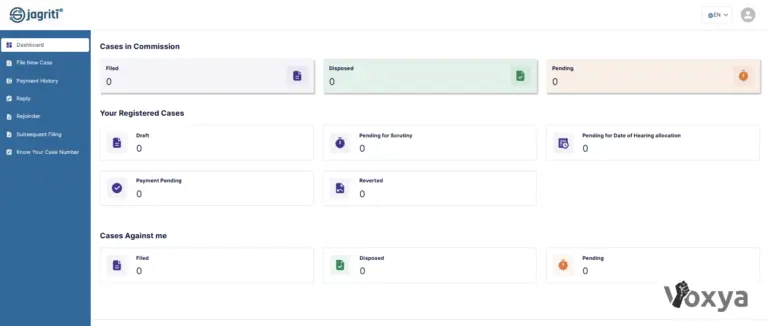
    5. Once you complete the registration process, you will be required to Log in into e-jagriti portal with your newly created account credentials. After login you will be taken to your Dashboard, where you can find all your filed, pending and disposed cases.

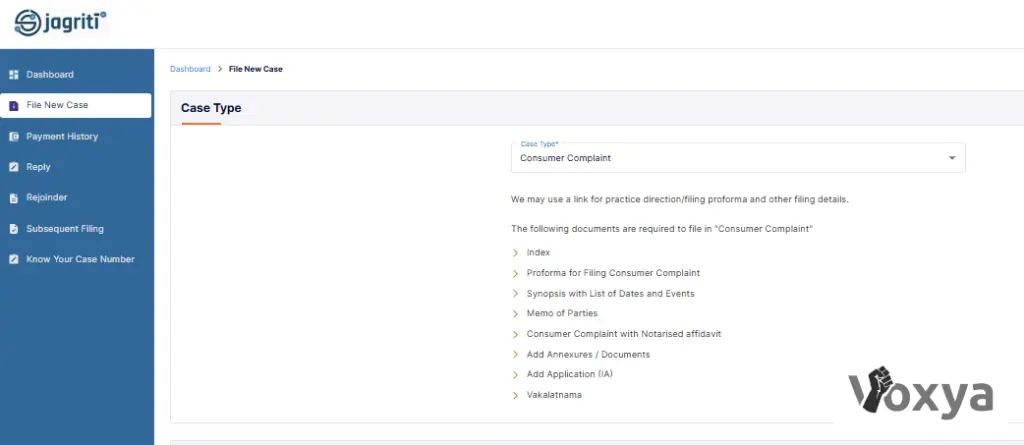
    6. Now click the option “File New Case” at the left-hand side panel in your Dashboard. Then select the option of “Consumer Complaint” to start filing a fresh case at e-jagriti platform. On this screen, you will see a list of documents (Index, Memo of Parties, Proforma, Synopsis, Dates and Events etc) which you will be required to submit to file a consumer complaint.

    Before proceeding further, you first need to collect/prepare these required documents so that you can smoothly complete the online case filing process.

    Are you confused with the e-jagriti documents required and want sample of documents?

    Get e-jagriti Sample Document Kit @ Rs.699 only.

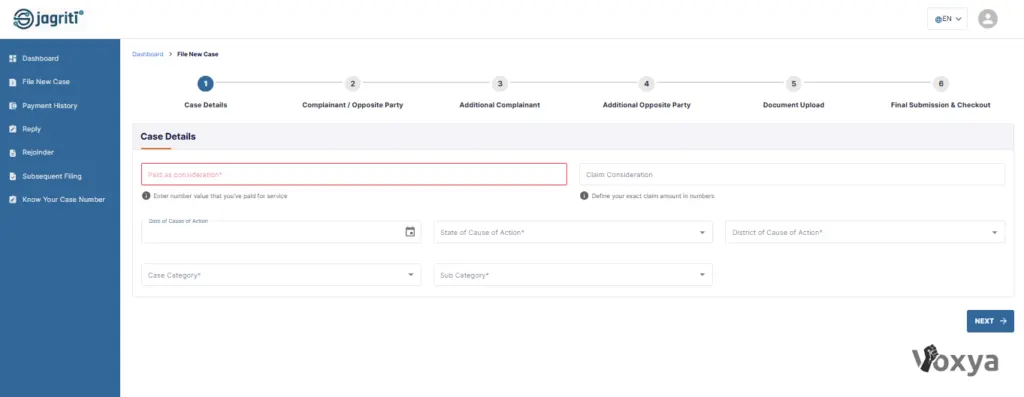
    7. To file a new case, you will have to provide details like Amount paid, Amount claimed, Date of cause of action, State, District, Case category and Sub-category. Based on Amount involved in the complaint and the place of cause of action, the court fee and the jurisdiction of the matter will be decided – whether your case will be filed in District Consumer ForumState or National Consumer Disputes Redressal Commission.

    8. Next you will be required to provide details of Complainant and the Opposite party in your case. Please note that you can add additional complainant and opposite parties, if your case requires.

    9. The next step in filing complaint is to upload all the required documents at the e-jagriti portal. You should be ready with the PDFs of all the relevant documents like index, proforma, memos etc. to complete the filing of e-jagriti consumer complaint. The file size of each PDF file should not be more than 10 MB. You will also get option to add Additional documents in this step wherein you can upload all the relevant evidence in your case like Invoice, Payment receipt, Email records, Bank statements etc.

    10. After uploading all the required documents at E-Jagriti portal, you can Preview and complete final submission of the consumer complaint. Once all the documents are uploaded successfully, you will see your case as “Pending” in your Dashboard.

    Documents required to file a Case at e-jagriti.gov.in

    1. Index
    2. Proforma for Filing Consumer Complaint
    3. Synopsis with List of Dates and Events
    4. Memo of Parties
    5. Consumer Complaint with Notarised affidavit
    6. Annexures / Documents
    7. Application (IA)
    8. Vakalatnama

    Index is like a book index that provides page numbers for each section or document in your complaint.

    Proforma provides important details of the case, like jurisdiction, category, amount claimed, etc.

    Dates & Events is a list of important events in your case along with their respective dates.

    Memo provides the name, address, and contact details of each party involved in the case.

    Consumer Complaint is a written document explaining the problem that you have faced and clearly states the relief that you are seeking. It should also mention the compensation, damages, costs, refund, or interest amount.

    You can upload additional documents or Annexures to support your consumer complaint. These could be pieces of evidence such as invoices, payment receipts, agreements, letters, emails, pictures, etc.

    If you are filing a fresh consumer complaint, then IA application will not be required.

    If you are filing and attending the case yourself and will not be hiring an advocate to represent you in court, then you do not need a Vakalatnama.

    If you want to learn more about Consumer Court process, check our paperback book or read online book.

    Monitoring Complaint Status

    It is suggested to actively check your consumer complaint status on e-jagriti portal. Regularly checking the status can help in influencing the speed and outcome of your complaint resolution.

    • Regularly check the status of your case on the portal.
    • Respond promptly to any requests for additional information from e-jagriti.

    Ensuring Success on e-jagriti: Best Practices

    Follow these best practices to optimize your e-jagriti complaint to influence the outcome. (Source: eDaakhil Case Filing) Here is how to optimize your consumer complaint for a successful resolution:

    Crafting Your Complaint

    It is important to draft your consumer complaint clearly. Explain the issue and the resolution you are seeking. Be specific about what went wrong and how you would like the company to resolve the dispute. Use a neutral and factual tone and avoid any emotional language that could suppress the key facts of your case.

    Providing Evidence

    The strength of your complaint largely depends on the evidence and other details you provide. Submit all the relevant documents such as Bills, receipts, warranties, emails, and photographs that support your claim.

    Active Follow-Up

    You should be proactive after filing your consumer complaint. Regularly check the status of your complaint through the e-jagriti portal and responding promptly to any additional information or documentation requests from the authorities.

    Seeking Additional Support

    Sometimes the entire complaint filing process can be challenging for consumers. You should consult a professional lawyer or consumer rights organization like Voxya if you are not sure about your rights or the process. They can provide guidance, support, and in some cases, representation to get resolution in your case.

    Thats all!

    We hope that by following the steps and best practices outlined in this article, you can improve your chances of getting a favorable resolution in your consumer complaint through e-jagriti.

    Frequently Asked Questions

    Is the e-Jagriti portal — or even going to consumer court — worth the time?

    Yes. If you have faced unfair trade practices, defective products, or poor services, filing a complaint through e-Jagriti or physically in consumer court can help you seek redressal. The portal saves time, avoids unnecessary travel, and provides a transparent digital process. However, you can hire a lawyer if you are busy and does not want to be involved in legal complexities yourself. The lawyer can file case offline or online using e-jagriti.

    Should I file a case on e-Jagriti (new version of e-Daakhil) or go to consumer court physically without a lawyer?

    If you are comfortable with online procedures and document submission, e-Jagriti is a convenient choice. You don’t need a lawyer. However, if you’re unfamiliar with digital filing, you can visit the consumer court physically and submit your complaint in person.

    What are the documents required to file a Consumer Complaint?

    The key documents typically required are:
    Index
    Memo of Parties
    Proforma
    Synopsis
    List of Dates & Events
    Consumer Complaint
    Notarised Affidavit
    Supporting documents (e.g. invoices, payment receipts, emails, photos, agreements, etc.)

    How to get help with the Proforma for filing a consumer complaint on e-Jagriti?

    You can find sample Proforma templates online or purchase a sample document template kit from Voxya. The template has to be filled with details such as jurisdiction, category, and amount claimed.

    How to get help with Synopsis, List of Dates and Events for filing consumer complaint on e-Jagriti?

    You can refer to sample formats or use paid sample document kit that include fillable templates for Synopsis and Dates & Events. These are offered by Voxya here that assist with e-Jagriti filing.

    How to get help with Memo of Parties and Consumer Complaint with Notarised Affidavit for filing consumer complaint on e-Jagriti?

    You can either draft them yourself using sample templates or purchase sample document kit from Voxya. It can help you prepare the Memo of Parties, Complaint, and Affidavit.

    Can I use old sample documents that I purchased a few months ago?

    No, you should use them only if they are still relevant and match the current format accepted by the portal or court. Just make sure the templates are updated with your latest details.

    Do I need to send a legal notice to the company via registered post before filing a legal case on e-Jagriti?

    Yes, it is required to send a legal notice via registered post before filing a complaint. This gives the company a fair chance to respond and shows the court you made an effort to resolve the issue amicably.

    Do I need to go to district court for notarizing my documents?

    Though you can get documents notarized at any licensed notary public but it is always better to be at the district court to get this done. Many advocates in the court offer notary services.

    Can I hire a lawyer and pay them to take care of these complex legal things?

    Yes. While it’s not mandatory to hire a lawyer for consumer cases, you can hire a lawyer if you prefer legal assistance with document preparation, filing, or court representation.

    Can I get help by contacting NCH, e-Daakhil, or e-Jagriti helpline number?

    Yes, you can try reaching out to them but they typically assist with basic queries, not document drafting or legal advice.

    Can you please explain each of the documents required and share a sample format of each?

    Yes, each document serves a specific purpose. Here’s a brief overview:

    Index – A table listing all attached documents with page numbers
    Memo of Parties – Details of complainant(s) and opposite party(ies)
    Proforma – Form containing jurisdiction, amount claimed, case type, etc.
    Synopsis – Short summary of the complaint
    List of Dates & Events – Chronological list of incidents
    Consumer Complaint – Full written complaint with facts and relief sought
    Affidavit – A notarized statement affirming the truth of your complaint

    You can find sample formats online or purchase a sample document kit from Voxya here.

    Is the case hearing done online or offline in the court?

    Currently, case filing is online but hearings are mostly offline in the consumer court. However, some courts may allow video conferencing depending on the case and availability.

    Are you looking for Required Documents for
    filing a Case on e-Jagriti?

    Get e-Jagriti Sample Document Kit
    Just ₹699 only

    Simply download, fill in your case details, and
    you are ready to file case at e-jagriti portal.

    Relevant Links

    E-Jagriti portal login (Register and login if you want to file a fresh consumer complaint)
    Send Legal Notice (File a complaint and select option to send Legal Notice)
    List of Consumer Courts in India (Select State and then select District to view details)
    Hire a lawyer (If you want a lawyer to file, fight and get judgement in the case on your behalf)
    Consumer Court Process (Check the complete process of filing case in Consumer Court)
    Check Case status (Check status of your consumer complaint at Voxya)

    EJagriti #ConsumerAwareness #DigitalConsumerRights #ConsumerProtectionIndia #EmpoweredConsumers #OnlineGrievanceRedressal #ConsumerEducation KnowYourRights #ConsumerPlatformIndia #JagoGrahakJago #ConsumerForum #ConsumerCourt #ConsumerCourtCase